
— Scene One —
My wife paints faces.
Birthdays, weddings, photo shoots. Tiny brushes, gold filigree, a kid's first sparkle. Hers is the original brushstroke. The rest of it is paperwork.

My wife runs a business.
I'm not a coder. I see patterns.
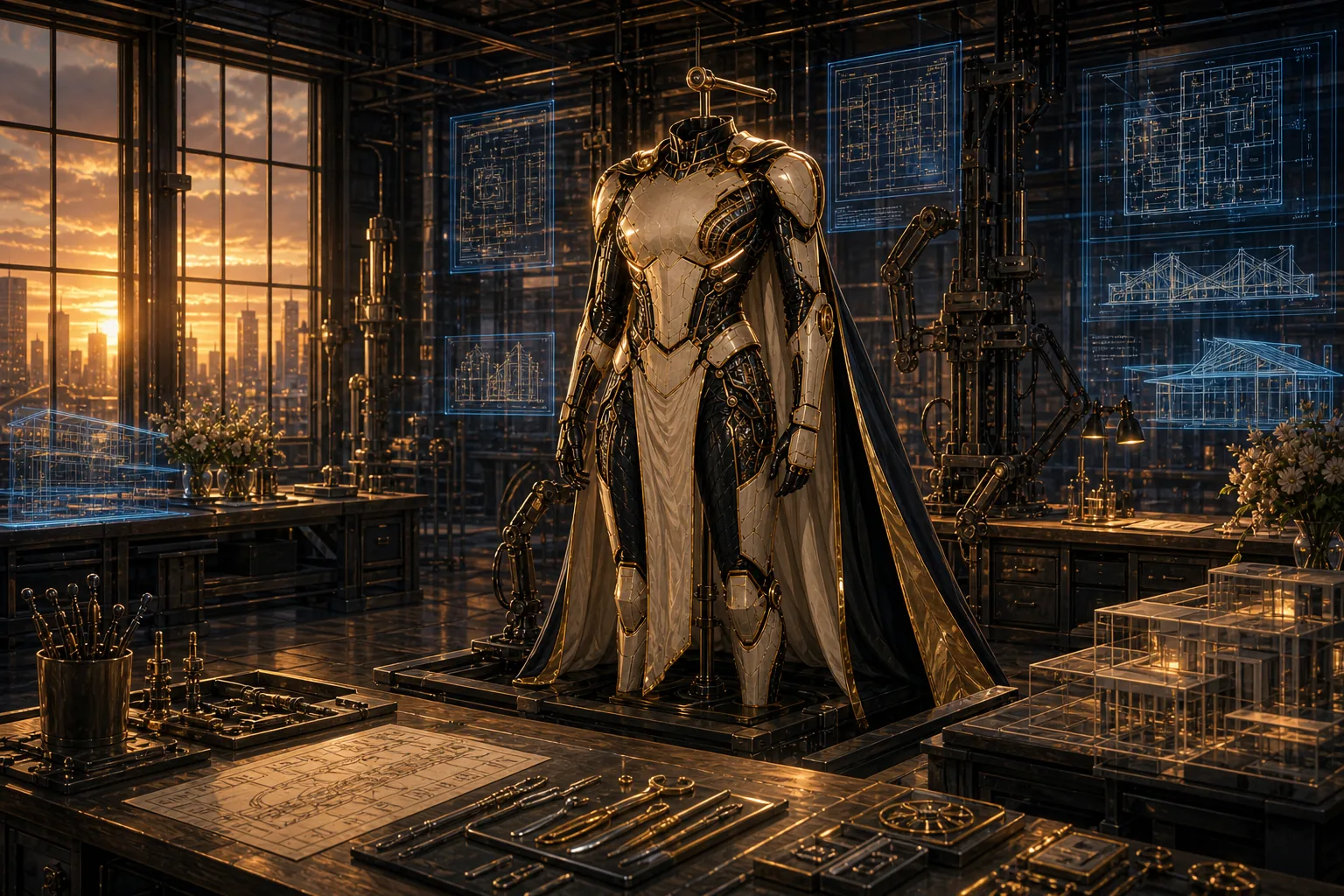
So I built her a suit.
In which a business runs on coffee and on heart — and the part nobody sees runs the night.
Birthdays, weddings, photo shoots. Tiny brushes, gold filigree, a kid's first sparkle. Hers is the original brushstroke. The rest of it is paperwork.
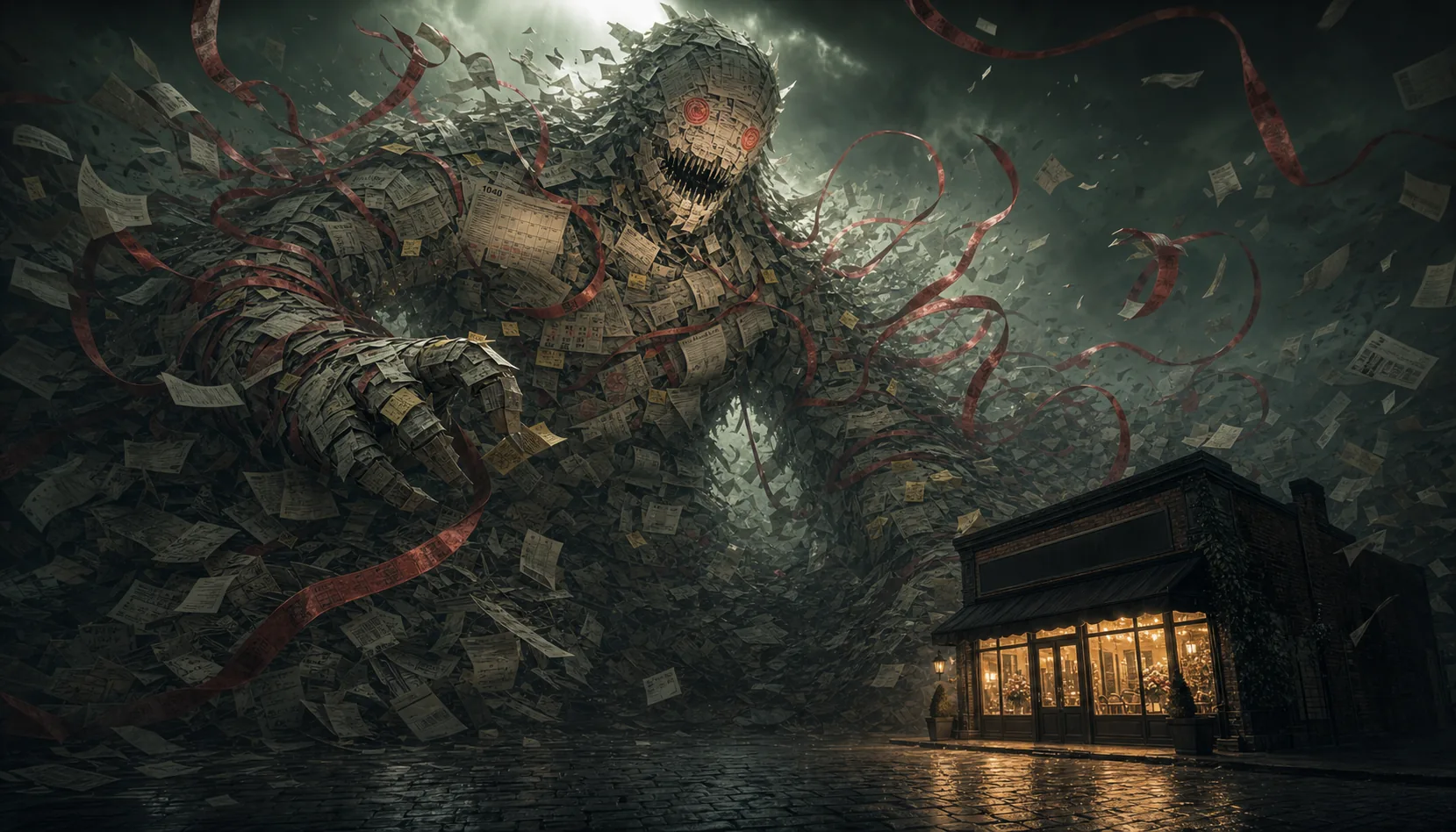
It's the calendar. The receipts. The five apps that don't talk. The phone call at 9 PM about a date she already turned down. It's bureaucracy with a heart it doesn't deserve.
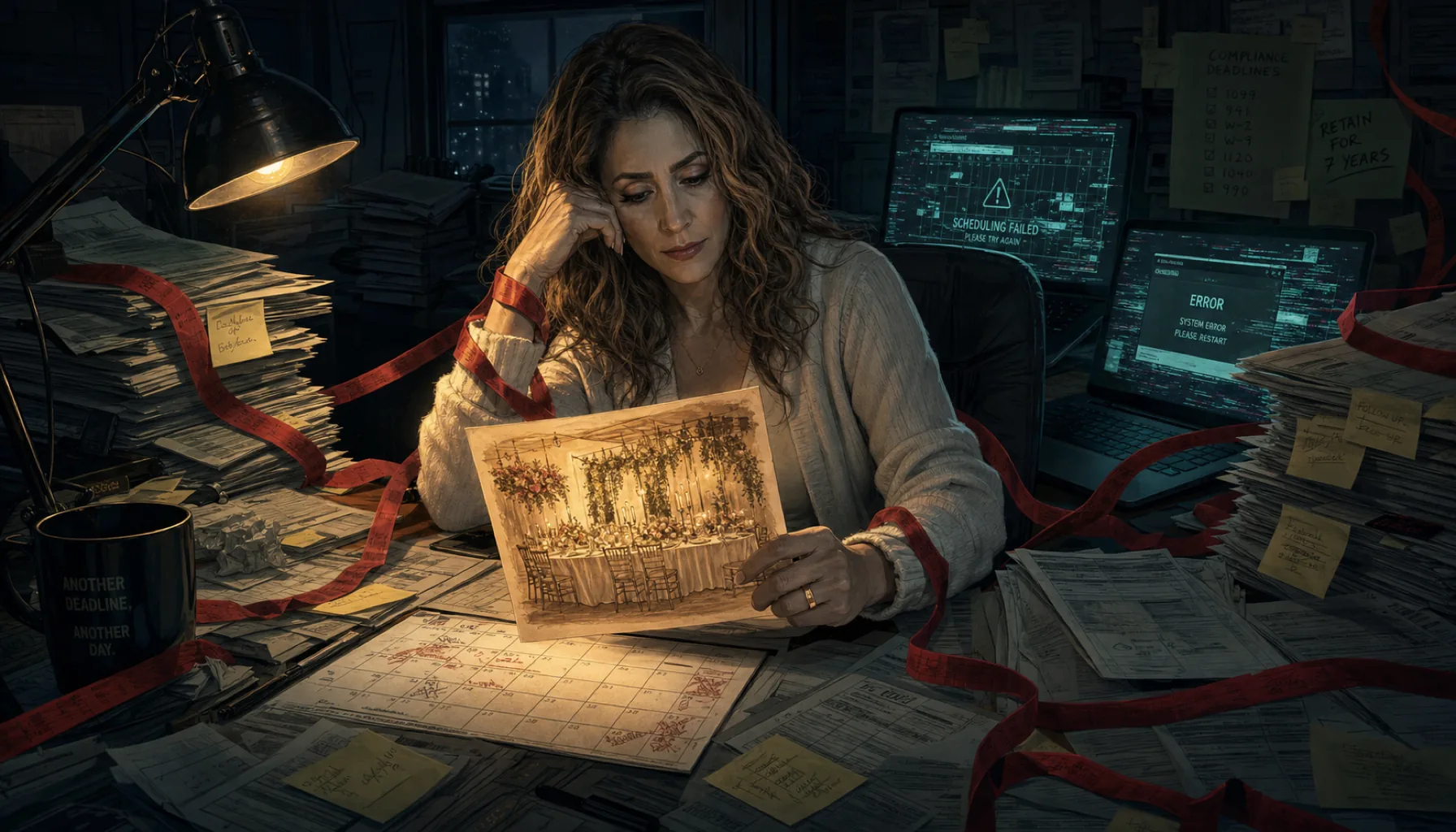
The work just took her — quietly. Past midnight. Sundays. The kitchen table at 11 PM with the lamp on, fighting software. I don't think she noticed she was disappearing.
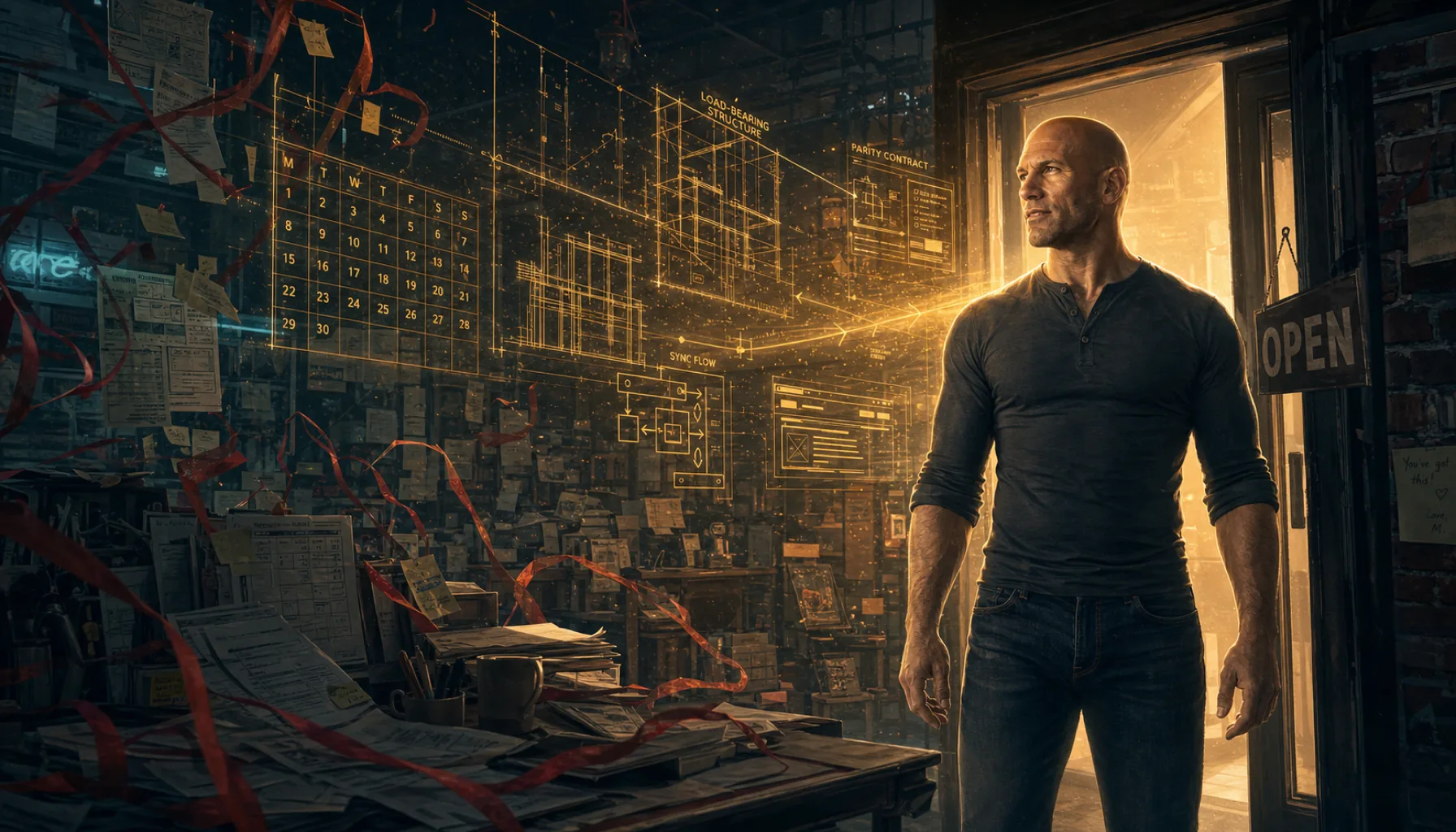
Twenty years of watching teams build software has taught me one thing — the shape of a system is just the shape of the people who use it, frozen. And the pattern in my hands was a suit.
In which a man who isn't a coder builds his wife a suit of armor — out of patterns, AI, and four guards that don't speak English.

It doesn't replace her. It doesn't pretend to be her. It carries the part she shouldn't have to carry alone. The boring half off her so she can keep being the half that matters.
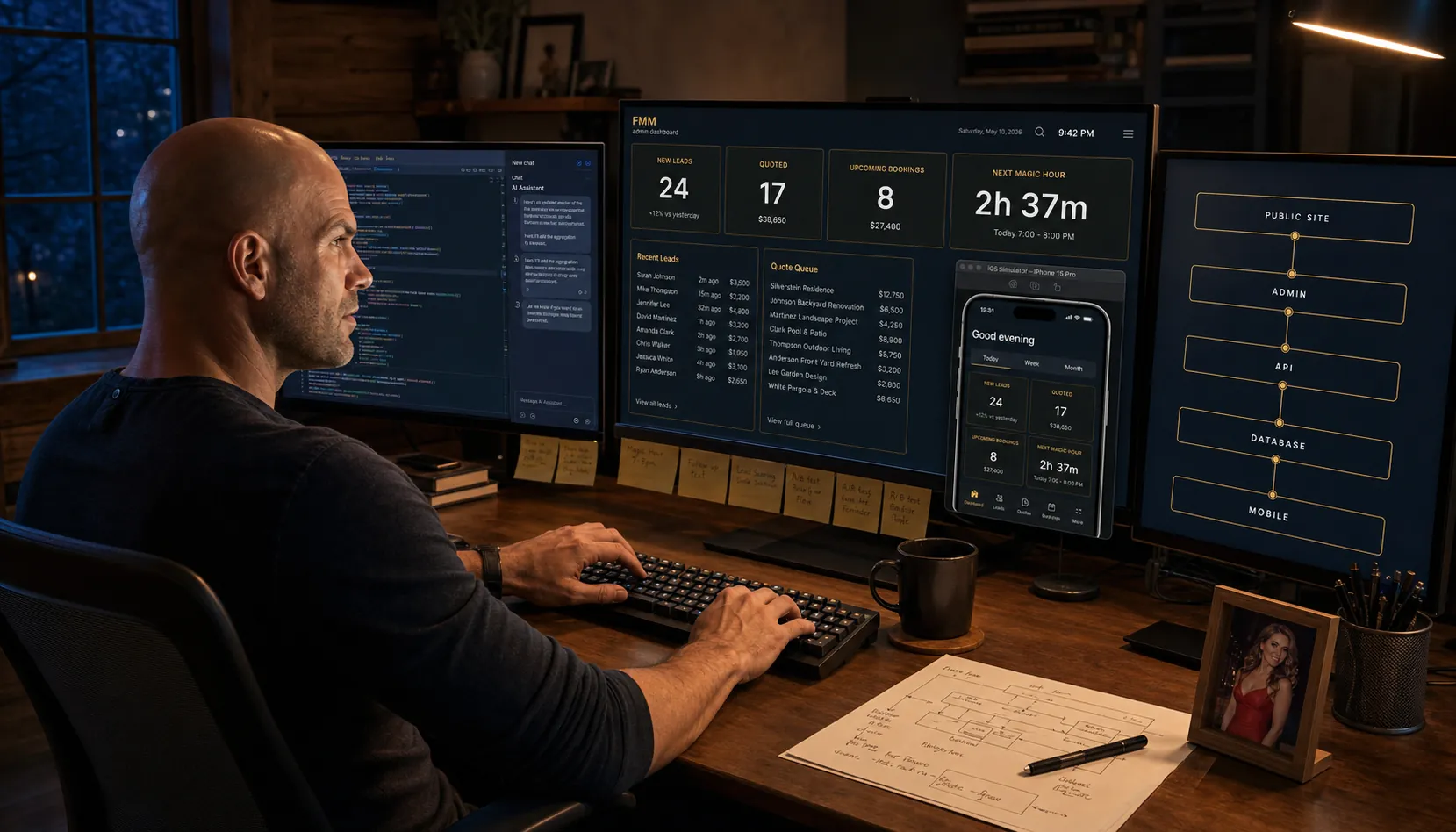
Three monitors. A kitchen-table desk. A photo of her in a red dress in the corner. Multi-agent orchestration on the left screen, her dashboard on the right. The whole thing is one workshop now.
They speak regex. They check the parity. They refuse the commit if any two layers disagree. An AI can argue. A regex cannot. That asymmetry is the whole game.
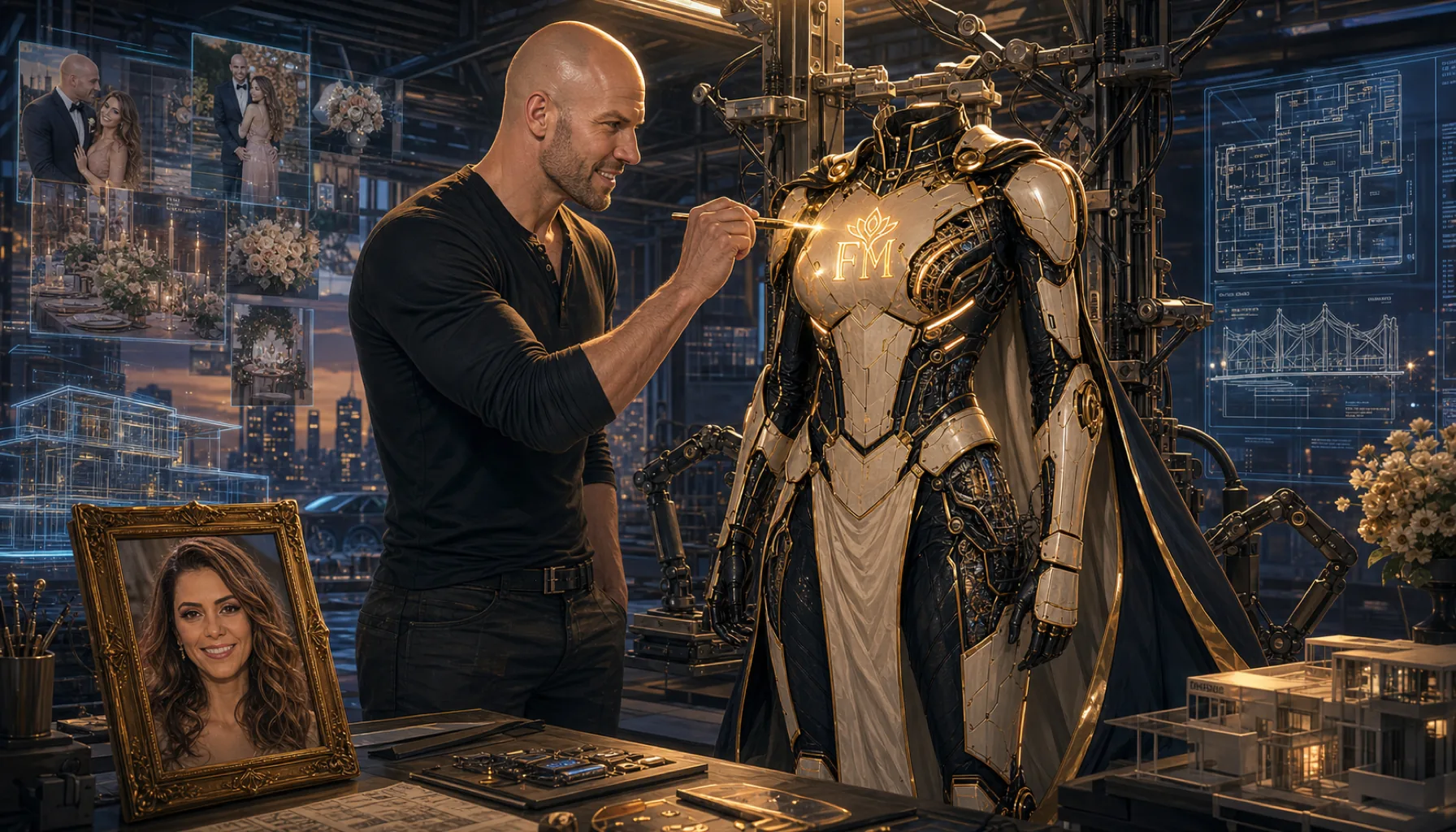
Not made of code, exactly. Shaped around the curve of how she actually works — bookings on her phone at the venue, waivers signed in the school pickup line, the FM glowing under the brush.
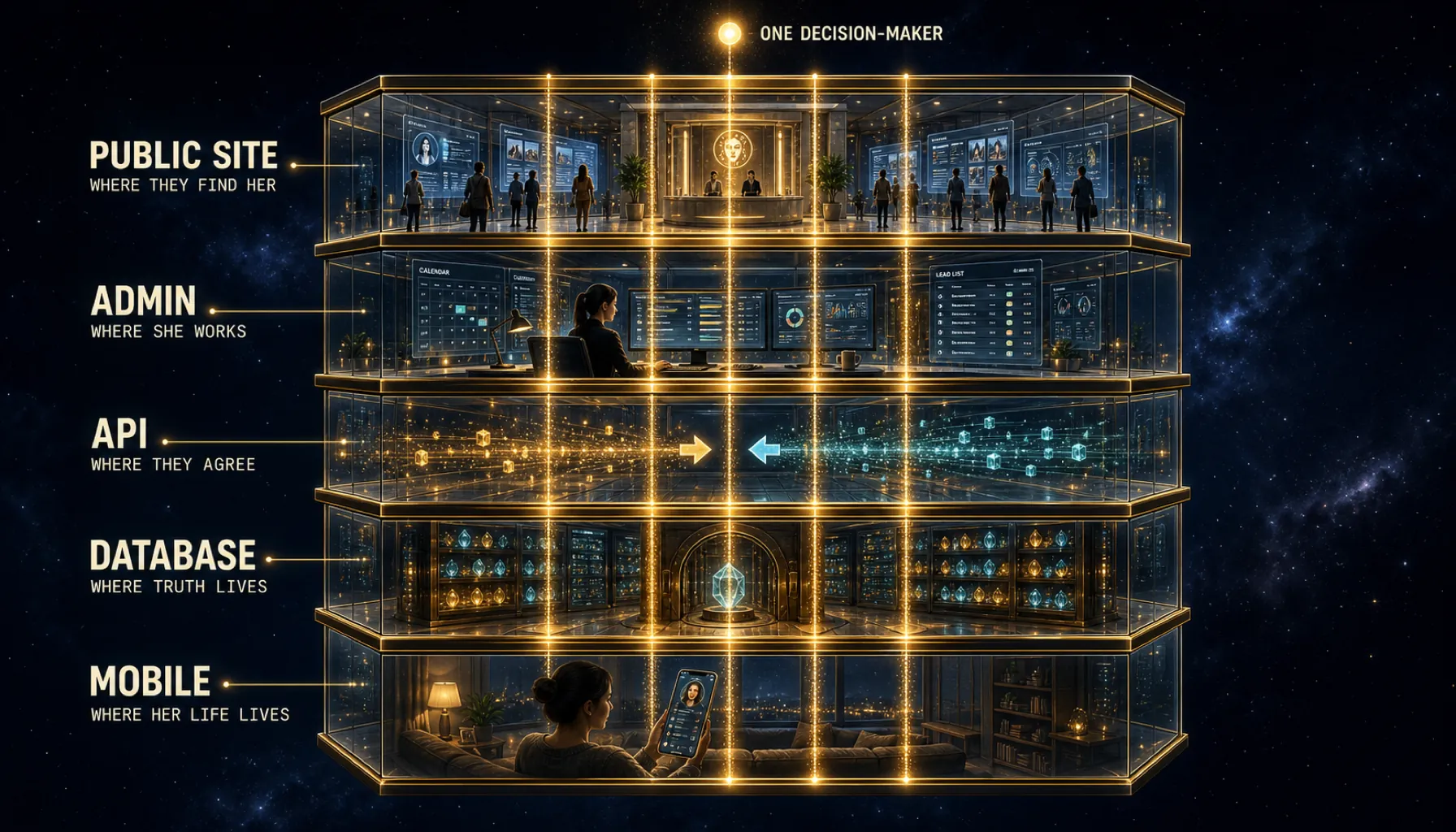
Public site. Admin. API. Database. Mobile. If any two stop agreeing about what a field means, no commit ships. The platform physically cannot ship a half-finished feature.
In which both of us get a suit — and the villain doesn't get a death scene. It just stops mattering.
The AI gave me back my throughput. The platform gives her back her artistry. Same architecture of amplification, pointed two directions. Two people who get to be the part of themselves they actually like.
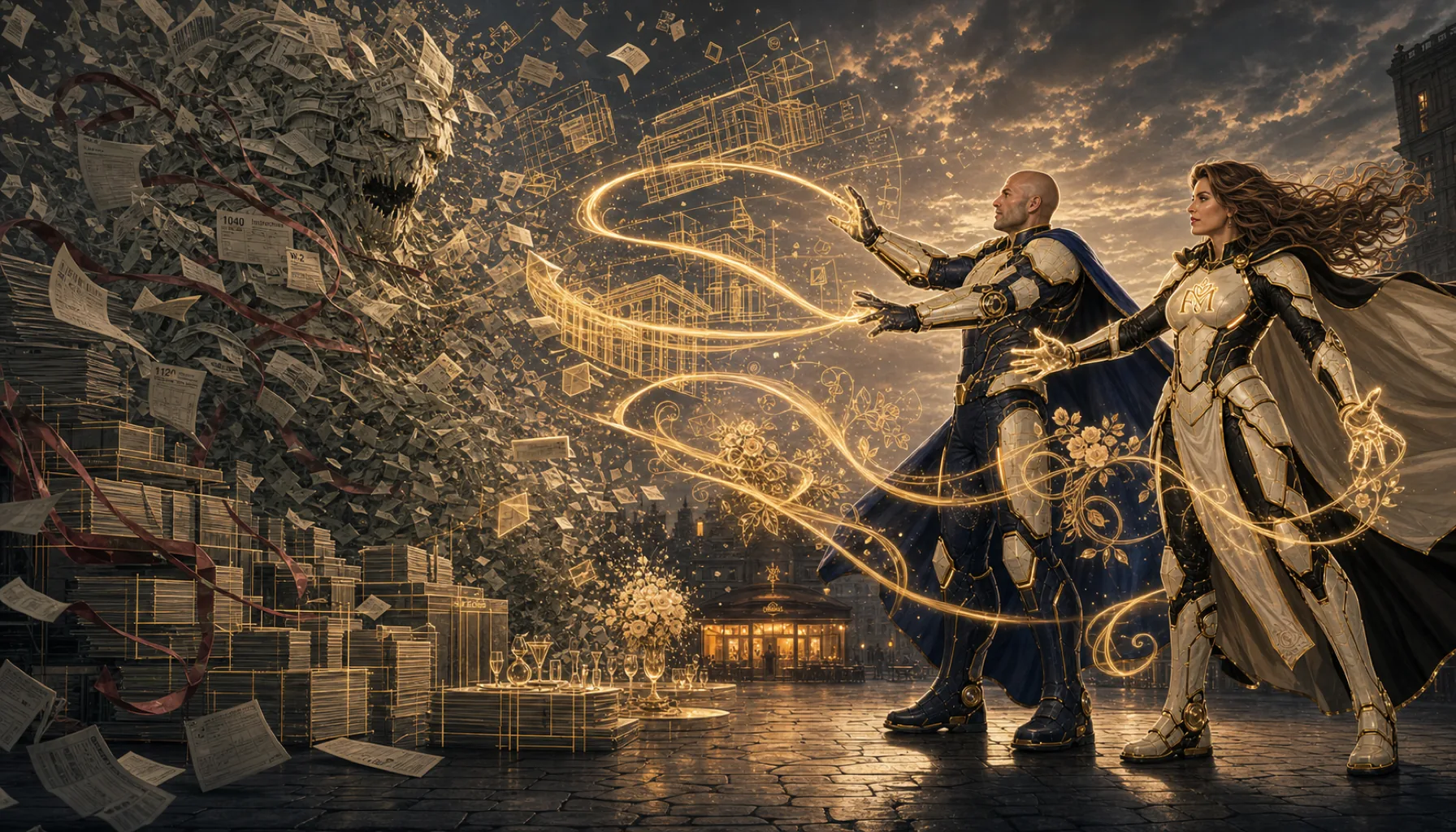
The double-booking that doesn't happen. The waiver that signs itself in a parking lot. The receipt that syncs when the WiFi comes back. The villain doesn't get a death scene. It just slowly stops mattering.

The Sundays come back, one at a time. The lamp at 11 PM is on for reading now. Not for fighting software. She got back the version of herself she was when nobody was making her be the businesswoman.
Who's this now? Walking in?
It's you. Your workshop is warm. Your six senses are wired. Your suit is on its stand.
Thirty minutes. Eleven stages. Coffee in hand. You can't break anything. By the last stage, you're wearing it.
Begin Stage 01 →Four more doors. Pick the one that fits your moment.
Written, illustrated, and assembled by Christian Merkel. Miami · Karlsruhe · Tel Aviv. All art original — painterly panels generated via codex-image with reference fidelity to the author and his wife. No real persons depicted but us.
For Fefi — and for everyone she designs the days for.